Book: Careless People
Overview
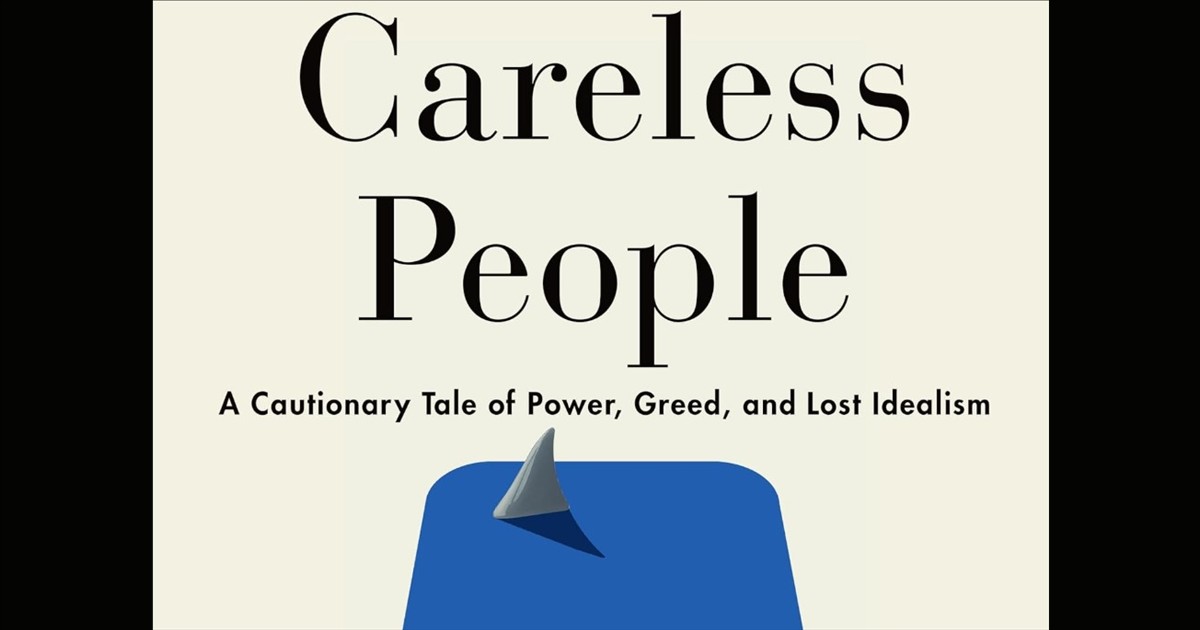
Title: Careless People: A Cautionary Tale of Power, Greed, and Lost Idealism
Author: Sarah Wynn-Williams
Published: 2025
Genre: Memoir / Narrative nonfiction
Pages: ~384
Description
Careless People is a memoir by Sarah Wynn-Williams, a former Facebook (Meta) global policy director who worked at the company from 2011 to 2017. The book offers an insider account of the social media giant’s rise to global dominance, detailing her experiences navigating the company’s culture, its relationships with world leaders, and the internal tensions as Facebook’s influence — and the awareness of its harms — grew.
Wynn-Williams writes candidly about the idealism that drew her and others to Facebook’s mission of “connecting the world,” and how that idealism was gradually eroded by corporate priorities. The title is a nod to F. Scott Fitzgerald’s phrase in The Great Gatsby about “careless people” who “smashed up things and creatures and then retreated back into their money.”
Note: After publication, Meta sought and obtained a temporary gag order against Wynn-Williams, which generated significant press attention. The book quickly became a bestseller.
My Notes
I’ve worked with many fine people at Microsoft over the years, and the majority of the time the decisions that were made were in the interest of the users. [yes, I know that sounds like Kool-aid drinking swill, but I stand by it] However, there were a few ego driven maniacs that would step on your neck to get ahead. For this I fully believe Wynn-Williams’s accounts of her interactions with the SLT of FB. Especially the accounting of how the sexual harassment by Joel Kaplan was swept under the rug. I’ve seen and heard too many accounts of that to have doubts. So-called ‘important people’ in my experience don’t have to endure the same consequences as the rest of us peons.
I also believe the overall theme of Sarah giving her whole life, nearly literally at some points, to the company. In his writings on Enshittification (post tbd) and tech labor that tends to work for less due to a misguided notion of the company’s ethos, Cory Doctorow uses the term “vocational awe”. When you are in the fog of working for these big corporations, you tend to feel like you need to hold on to it like a drownding man to a life raft. You put in the extra hours at expense to your family, personal life, and likely your own health. I did this, and regret it. Stay tuned for more posts under #work-life-balance; I’ve got beans to spill.
- As someone who works in tech, how did this book read to you?
I have had the fortune to talk to some high-level people at Microsoft, but not that many and not at depth, therefore it is hard to align with how the SLT at Facebook compare. Yet, I have had detailed discussions with some upper directors of various teams. They tend to have that air of superiority you feel when at an event meant for the ultra-rich. It is an aura you can’t put words to that creates a invisible wall between you. The fact that the employees at FB went along with decisions handed down from above is likely due to this waterfall of ego and unquestionable power. It is hard to put your job on the line in the face of “Who am I to question this person that others view as a genius leader?”… yet many times these leaders know much less than the myth deserves.
- Were there moments that felt familiar — or shocking?
The normality of it all was what shocked me. Looking back, I saw myself in similar (but way less consequential) situations doing what Sarah did, going along after very little protest. There is a strange blurring of lines you cross when told by ‘the power’ what direction the team is going to take. I am more aware of it now, and thus can stand up for the right path much easier. Still I know how easy it is to remain quiet, try to be a ‘team-player’ and do the thing you don’t really believe in. This is very much tied to group-think and social anxiety surrounding fitting in and not rocking the boat of your own career.
- Did it change how you think about large tech companies and their responsibilities?
No, I think the need for regulatory constraints in tech has always been one I would support. Corporations are always driven by mindless shareholders seeking more and more profit. It is built that way by design. The fastest way to that profit is likely going to screw over either the consumer, adjacent members of those consumers (society), or the employees of the corporation itself. Thus, I’ve always been in favor of guardrails written by experts in the respective fields, but not beholden to the industry to evolve the garden walls that protect us all. GDPR is one that comes to mind, as well as DMA which fences the apps tech companies make without restricting them… just leveling the playing field for either the consumer (GDPR) or the competition (DMA). We need to wrest control from the ultra-huge corporations that ‘self-regulate’ at the expense of society and free and fair competition. Capitalism was meant to have an organic evolution of competitors in order to be a benefit to society, not oligarchs that dominate as a monopoly.
- What’s your take on the tension between a company’s mission and its business model?
I think I fairly stated this in the last question, however… I feel that there is something inherently wrong with the profit driven model of a shareholder led entity whose only goal is to increase profit year after year at a rate that is unsustainable. This is a recipe for disaster even if it didn’t harm society. Sooner or later the decision to put profit and morals at odds will come to pass, and profit will nearly always win. Google removing ‘Don’t be evil’ from their corporate ethos was one of the most honest things I’ve seen in my lifetime.
Do I think this means we should move to a communist or even strict socialism model?… no. I am smart enough to know I am not smart enough to find the solution to this, yet I will support anything to add the guardrails needed to keep it in check till we do. You’d be an idiot to not realize there is something wrong with the corporate shareholder model that is playing out in this book.
Quotes
“Silicon Valley is awash in wooden Montessori toys and shrouded in total screen bans. Parents at work talk about how they don’t allow their teens to have mobile phones, which only underscores how well these executives understand the real damage their product inflicts on young minds.”
“You weren’t responsive enough,” he says.
“In my defense, I was in a coma for some of it.”“These are still the same careless people. They’ve changed the name of the company from Facebook to Meta. But leopards don’t change their spots. The DNA of the company remains the same. And the more power they grasp, the less responsible they become.”