AI is Left-Brained
Exploring the left-brained nature of AI and the importance of human-AI collaboration.
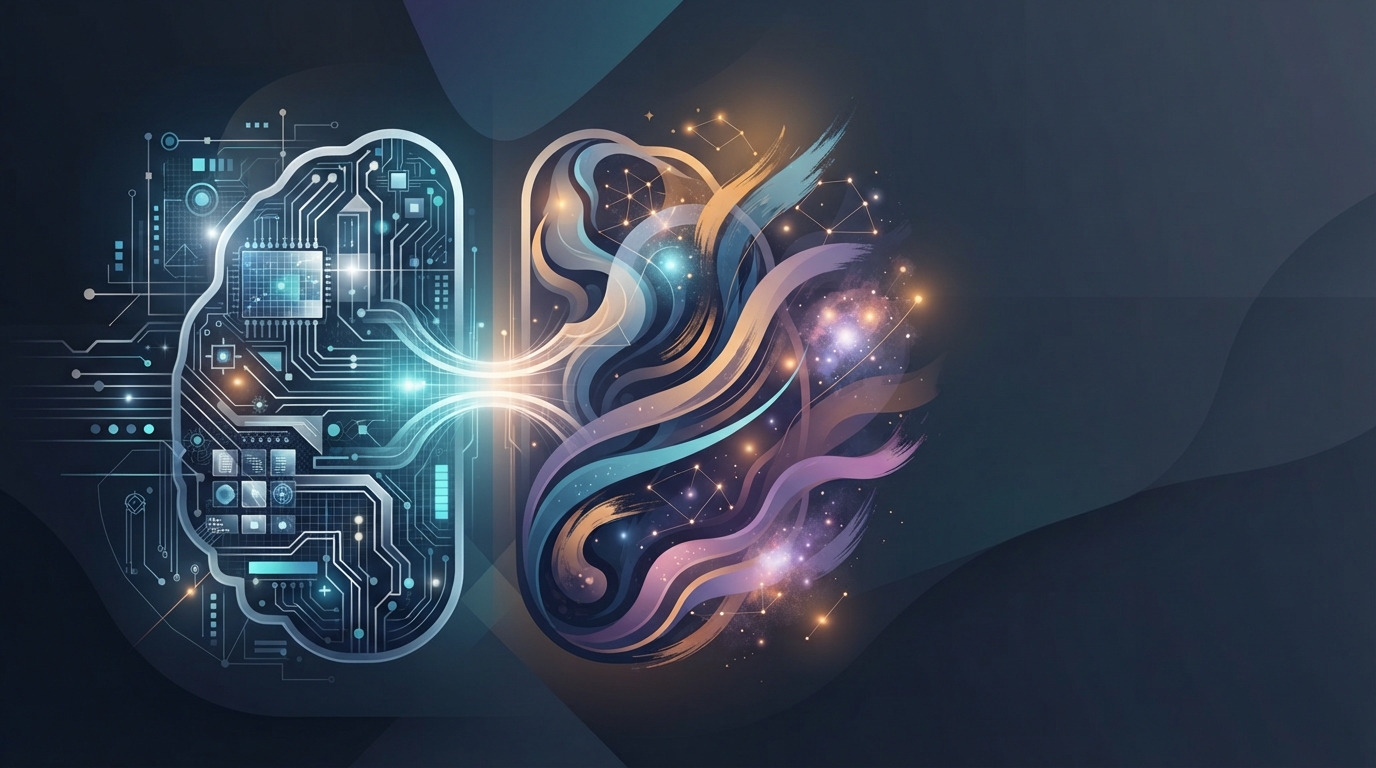
When I was studying architecture, I was introduced to the book “Drawing on the Right Side of the Brain” by Betty Edwards. This book emphasizes the importance of engaging the right hemisphere of the brain, which is associated with creativity, intuition, and holistic thinking. It made me realize the distinct ways in which the left and right sides of the brain contribute to human cognition and problem-solving. Note, I’m pretty sure nerologists will counter that this is unsubstantiated hog-wash and that the brain’s hemispheres are not as dichotomous as popularly portrayed.
Regardless, AI is often described as “left-brained,” emphasizing its logical, analytical, and structured approach to problem-solving. Unlike the right-brained, creative, and intuitive aspects of human cognition, AI excels in tasks that require precision, pattern recognition, and systematic reasoning. AI has been trained on what is already known and can efficiently process and analyze this information to generate insights and solutions. However it may struggle with tasks that require creativity, intuition, and emotional understanding.
Logical and Analytical Strengths
AI’s logical and analytical strengths are evident in its ability to process vast amounts of data quickly and accurately. Machine learning algorithms, for example, can identify patterns and correlations that might be missed by human analysts. This capability allows AI to make predictions, optimize processes, and support decision-making in a wide range of domains, from finance to healthcare. By relying on structured data and formal logic, AI systems can consistently produce reliable and reproducible results, highlighting their left-brained nature.
Limitations of Left-Brained AI
While AI’s left-brained characteristics offer significant advantages, they also come with limitations. AI systems often struggle with tasks that require creativity, intuition, and emotional understanding. For instance, generating truly original ideas or understanding nuanced human emotions can be challenging for AI. These limitations underscore the importance of human-AI collaboration, where the complementary strengths of left-brained AI and right-brained human cognition can be leveraged to achieve optimal outcomes.
Think of the last time you saw something that resembled creativity in AI, largely regarded as ‘generative’. Such as a piece of AI-generated art, music, or text. While these outputs may appear creative, they are ultimately the result of algorithms processing existing data and patterns, rather than true human-like creativity. They all seem some how ‘derivative’ rather than genuinely original.
Complementary Human-AI Collaboration
To overcome the limitations of left-brained AI, it is essential to foster complementary human-AI collaboration. Humans bring creativity, intuition, and emotional understanding to the table, which can complement the logical and analytical strengths of AI. By working together, humans and AI can achieve outcomes that neither could accomplish alone, combining the best of both left-brained and right-brained capabilities.
Tendency for Companies to Rely on Left-Brained AI to go ‘AI First’
Many companies are increasingly adopting an ‘AI First’ strategy, prioritizing the integration of AI into their operations and decision-making processes. This tendency often comes with reduction in human resourcing (called Layoffs), and misses the mark in strategies that will meld the strengths of both humans and AI. Instead, it leads to simple reliance on AI which simply makes derivitive output without creative leaps in innovation.
The Super Intelligence
The concept of “super intelligence” often refers to an AI that surpasses human intelligence across a wide range of domains. While this idea is largely theoretical at present, it highlights the potential trajectory of left-brained AI development. Super intelligent AI could excel in logical reasoning, data analysis, and problem-solving far beyond human capabilities. However, without the complementary right-brained qualities of creativity, intuition, and emotional understanding, even a super intelligent AI might struggle with tasks that require these uniquely human attributes.
If a super intelligent AI were made through the next leap in AI Research which possesed the ability to make creative leaps like humans, it could potentially overcome the current limitations of left-brained AI. Such an AI would not only excel in logical reasoning and data analysis but also demonstrate genuine creativity, intuition, and emotional understanding. This development could lead to a new era of AI capabilities, and possibly to the end of the human dominance in intellectual pursuits. Read “If Anyone Builds It, Everyone Dies: Why Superhuman AI Would Kill Us All is a 2025 non-fiction book by AI safety researchers Eliezer Yudkowsky and Nate Soares for a deeper exploration of the potential risks and implications of super intelligent AI.
Conclusion
Teams should resist the urge to go ‘AI First’ without considering the value of human input. By maintaining a balanced approach that leverages both the analytical power of AI and the creative, intuitive, and emotional strengths of humans, organizations can achieve more innovative and effective outcomes.