Book: Yellowface
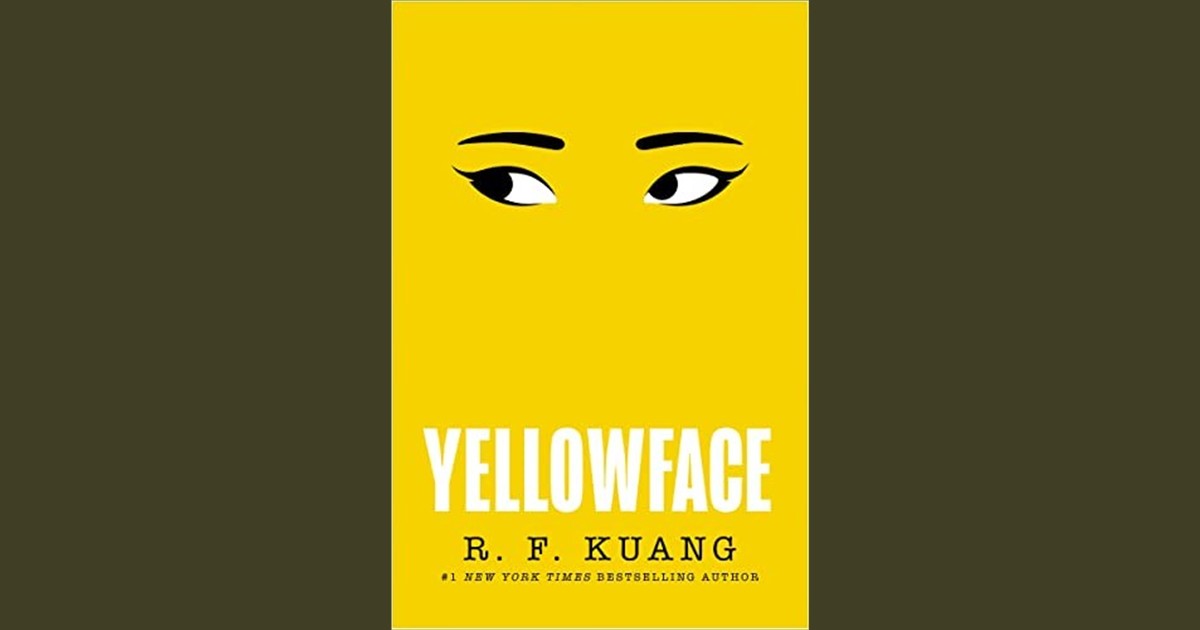
Overview
Title: Yellowface
Author: R.F. Kuang (Rebecca F. Kuang)
Published: 2023
Genre: Literary fiction / Satire
Pages: ~322
Rating: 7.5 / 10
Description
Yellowface is a biting satirical novel by R.F. Kuang, the bestselling author of Babel and the Poppy War trilogy. The narrator is Juniper “June” Hayward, a struggling white author who, after witnessing the accidental death of her more successful Chinese-American friend and fellow writer Athena Liu, impulsively steals Athena’s unpublished manuscript about the overlooked history of Chinese labourers in World War I.
June edits the manuscript, submits it under a slightly altered version of her own name, and watches it become a runaway bestseller. What follows is a darkly comic and deeply uncomfortable thriller about race, cultural appropriation, the publishing industry’s performative diversity, and the lengths people will go to protect their reputations in the age of social media pile-ons.
Kuang skewers publishing culture, white fragility, and cancel-culture dynamics with equal ferocity, making Yellowface one of the most discussed literary novels of 2023.
My Notes
Though it is outside my current reading tastes (I very much would have read this in high school or college); This book was recommended to me by a novel book lover primarily of crime stories and those with twists in the plot. This book definitely fits that bill. A lot of the plot is slightly see-through, I don’t think there were too many surprises to it for me, however it was a great read due to the psychological drama going on in the mind of the protagonist.
I felt that June constantly came up with reasons to justify her actions, mainly based on an unperceived jealousy of Athena’s success. June comes across sympathetic for the most part and you find yourself rooting for her most of the book. Her complaints about Athena are largely ones of superficiality even though they are delivered as criminally impeaching Athena’s character.
One aspect of the book I was tickled by was that Stephen King wrote a quote for the book, and in the book Kuang speaks derogatorily of King :)
The entirety of the Work was well written however some of the scenes are largely predictable, especially the ending scene. It took me out of the book a little bit knowing exactly what was going on, however I did not yet know the character who was hidden in that scene.
Largely think this is a good book, entertaining, and a quick read.
- Was June a sympathetic narrator to you at any point, or did you find her reprehensible throughout?
- Yes for the most part June comes off sympathetic, though her complaints about Athena fall on deaf ears. She tends to make excuses why her stealing the work of Athena is justified due to her own ‘collaboration’ with the dead author.
- Did the satire of publishing and social media feel accurate or exaggerated?
- No… this seems spot on. I especially like the way she bitingly portrays the publishing companies and publicists. I’d be this comes from real life experience of Kuang.
- How did the book make you think about who gets to tell whose stories?
- I’d like to believe that all books are a collaboration of lots of people, even when written by one author. Therefore, this work of June’s is simply a collaboration with Athena, and merits critical acclaim despite the theft of property.
- Were there moments the book made you uncomfortable in a productive way?
- The theft of the authorship of the book made me consider the rift in Software Development going on currently. With Agentic Coding being the normal way we produce software code, who is the author? Should I take credit for the works I develop if an AI agent is producing 100% of the code I’ve directed it to? (Yes, I will 😊 )
Quotes
“People want stories. And if you give them a good one, they won’t care who it came from.” A perfect encapsulation of June’s self‑justification — and the novel’s critique of how the industry rewards certain voices.
“Success is a story we tell ourselves.” A line that hits the book’s obsession with image, narrative, and self‑mythology.
June’s justification spiral — She insists that Athena “would have wanted the book finished,” reframing theft as duty.
Important moments:
The industry’s hunger for trauma — A sharp moment where June realizes publishers prefer minority pain packaged for white audiences.
The social‑media paranoia — June rants about how “the internet decides who you are,” capturing the book’s satire of online mobs.
Athena’s ghostly presence — June feels haunted not just by guilt but by Athena’s brilliance, which she can never match. This reminds me of Poe’s ‘A Tell Tale Heart’
The final unraveling — June finally admits to believing her own lies, showing how self‑deception becomes identity.