Book: Flow
Overview
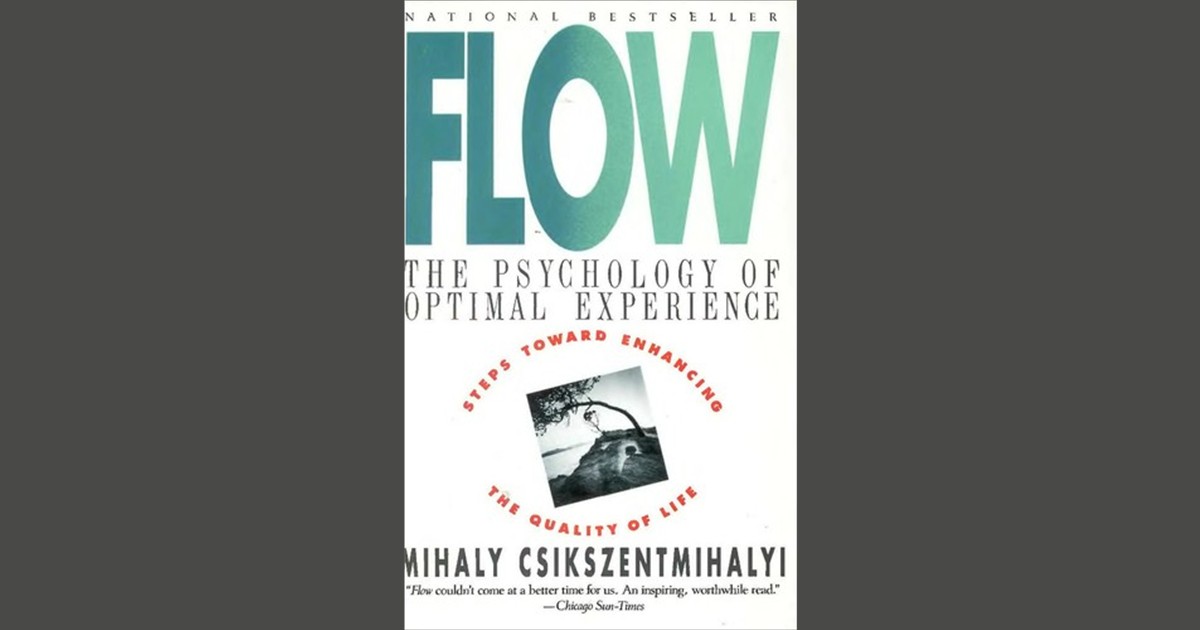
Title: Flow: The Psychology of Optimal Experience
Author: Mihaly Csikszentmihalyi
Published: 1990
Genre: Psychology / Self-help
Pages: ~303
Rating: 5 / 10
Description
Flow: The Psychology of Optimal Experience is a landmark book by Hungarian-American psychologist Mihaly Csikszentmihalyi (pronounced “cheeks-sent-me-high”). Drawing on decades of research, Csikszentmihalyi introduces the concept of “flow” — a state of complete immersion and energised focus in an activity, often described as being “in the zone.” When in flow, people report feeling fully alive, creative, and satisfied.
The book argues that happiness is not a passive or random occurrence, but can be cultivated by learning to control inner experience. Flow states arise when the challenge of an activity is balanced against one’s skill level: too easy, and boredom sets in; too hard, and anxiety takes over.
“The best moments in our lives are not the passive, receptive, relaxing times… The best moments usually occur if a person’s body or mind is stretched to its limits in a voluntary effort to accomplish something difficult and worthwhile.”
— Mihaly Csikszentmihalyi, Flow (1990)
| Source: HarperCollins – Flow | Open Library |
My Notes
My experience of this book was a bit … subpar. I’m sure it is a decent book for some, but not me. I felt that the concepts in it were too obvious for me and routed in semi-religious tones that evoke new-age concepts of the 1980’s. I perfectly agree with what is being attempted, that we should be active participants in our goals toward happiness, through the acts of zen like focus in creative tasks. I get this and have experienced a state of ‘flow’ so many times it is hard to dismiss the joy I feel when in it.
I get a sense of the author’s flow when doing woodworking, drawing (especially pencil shadowing) and doing software writing tasks that are just … a flow of my fingers and mind in concert getting the architectural ideas out in a design pattern. Software to me is akin to my previous work in architecture, there is a virtual structure to code that needs to have paths for data to come and go ; as in people of a building space; as well as a rational meld of joined modules of work being done; similar to activity planning of kitchen and living rooms; the idea and logic are not as dissimilar as you would feel they should be in how one employs the same thinking to create a building or a piece of software.
- Have you experienced “flow” states in your own work or hobbies? What triggers them for you?
- Usually this occurs after hours and hours of experience in a task or skill, you feel like you can ‘turn-off your mind’ and just meditate in the work you are performing. When hollowing out a dovetail in a wood joint, or banging out code for a known design pattern, the flow feels very similar. Throw some appropriate music in there (electronic for coding and classical or 90’s alternative for woodworking) and you got yourself a Zen experience.
- Did the book change how you think about structuring your work day?
- No… honestly I found it hard to complete this work… I have no ill will toward it, just found it to be too much agreeable to my own already understood knowledge of ‘flow’ in myself.
- How does this relate to your engineering or creative work?
- Stated above… flow has often come while working on software. Software is an art.. and as such lends itself closely with a state of mental flow.
- Was there a concept that surprised you or that you disagreed with?
- Some of the more… crunchy concepts turned me away. I think I’m too averse to this type of thing to give it serious consideration.
Quotes
“Control of consciousness determines the quality of life.” A foundational idea: your experience improves when you learn to direct your attention.
“The best moments in our lives are not the passive, receptive, relaxing times.” A reminder that fulfillment comes from challenge, not comfort.